
Amphioxus, like some vertebrates such as salamanders, is endowedwith impressive regenerative ability even as an adult. The species we use in the lab, Branchiostoma lanceolatum, can regenerate all major axial structures of the tail, including segmented musculature, notochord and nerve cord. Amphioxus may therefore be an invaluable system for understanding the evolution and cellular basis of regeneration in chordates. While many resources are available to do research in cephalochordates, including several fully sequenced genomes and transcriptomic data, as well as techniques like microinjection, in situ hybridisation and immunohistochemistry, it is currently not a tractable genetic system for post-embryonic research. One of the lab’s main goals is to develop the functional tools necessary to study regeneration in amphioxus adults. Success in this endeavour will have a major impact on our ability to perform comparative analyses with other systems, and can inform future research in more complex vertebrate systems by providing an ethically acceptable invertebrate model.
Developmental control genes in regeneration
“Perfect” regeneration of complex structures is accomplished through the coordination of proliferation, cell death, metabolism, cell migration, and patterning events. The signalling pathways responsible for normal development need to be re-initiated after wound healing in the correct spatio-temporal sequences to ensure integration of the new structures with the remaining mature tissues. We are interested in how developmental control genes like homeobox transcription factors (e.g. Hox, Pax) are re-deployed during regeneration in different groups. Specifically, can we identify commonalities in their expression and function during regeneration of the amphioxus tail, an axial structure, and the annelid operculum, an evolutionary novelty? How much does regeneration really recapitulate development? In collaboration with Dr Ferrier, we are combining transcriptomics of regenerating tissues with in situ hybridisation to visualise patterns of gene expression in an effort to characterise these systems.
Evolution of chordate development
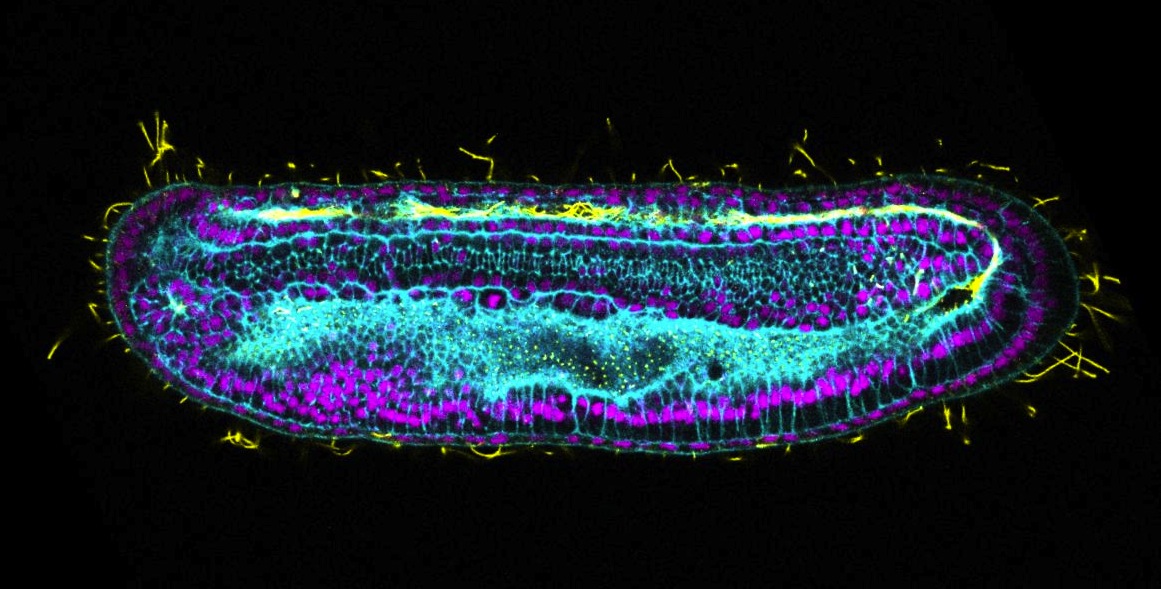
Understanding developmental mechanisms is key to understanding regeneration. However, studying development within an evolutionary or comparative context provides clues about the plasticity of mechanisms that generated the diversity in morphologies we see today. We use amphioxus as a proxy for the chordate ancestor due to its sister relationship to the clade containing vertebrates and ascidians, and because it has comparatively more simple genome organisation and anatomy. We are particularly interested in understanding the coordinated regulation of signalling pathways like Wnt and BMP in amphioxus tailbud formation, and how this differs from vertebrate models like zebrafish. Our tools include immunohistochemistry, in situ hybridisation and pharmacological treatment of embryos to disrupt signalling in key developmental windows.
Funding
Current Funding
- 2014: MASTS PECRE young investigator grant to IMLS
- 2014: Royal Society Research Grant to IMLS
- 2014: BSDB Gurdon Studentship for summer vacation work to Ashley Bae/IMLS
- 2012-2014: MASTS
Past Funding
- 2009-2011: Marie Curie (FP7 People Programme)