BL2309 – Applied Molecular Biology

BL2309 – Applied Molecular Biology
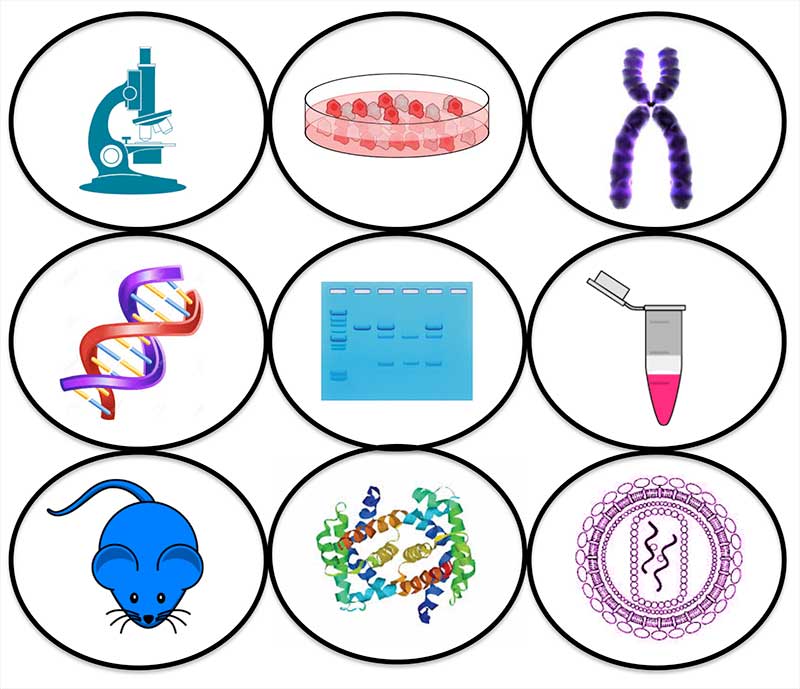
Techniques in molecular biology represent a powerful box of tools that are used to address a wide variety of modern research questions across a broad range of biological disciplines including; ecology, biotechnology, cell biology, medicine, conservation biology, infectious disease, evolution, genetics and synthetic biology. Key molecular biology techniques will be introduced in the context of case studies that will provide examples of how molecular biology techniques are being used in cutting edge research to address real-life questions and problems that impact health, food security, the environment and the economy.
Skills acquired in this module:
Related Programme(s):
Module Code:
BL2309
Semester:
2
Credits:
15
Module Organiser:
Pre-requisite modules: BL1101 - Biology 1 and BL1102 - Biology 2
MMS
Timetable:
[events_list category="BL2309"]
Assessment:
2-hour Written Examination = 50%, Coursework = 50%MMS assessment details
The following related information applies to all Biology modules:
School of Biology Marking Criteria:
School handbook
Late submission of continuous assessment work:
All late submissions of coursework that do not require electronic submission should be made via the late submissions box in the Biology Study Space, St Andrews New Technology Centre Building (beside the Teaching Office)
Exam details:
School handbook
Exam timetable:
Timetable
Expected attendance:
School handbook
Good Academic Practice & Avoiding Academic Misconduct:
School handbook
University Student Handbook:
University student handbook
School and University Regulations:
School and University regulations in the School and University Undergraduate Handbook relating to absence reporting, penalties and rules for late submission of work, extensions for coursework, return of coursework, S-coding, good academic practice and Academic Alerts.
School handbook
University student handbook
Staff:
Learning Outcomes:
Students completing module BL2309 successfully should be able to:
- Identify a range of key techniques that are commonly used in molecular biology.
- Describe the concepts behind key molecular biology techniques, which generally require the manipulation of DNA, RNA, protein or lipid.
- Discuss examples of how molecular biology techniques are used to address current questions and problems across a broad range of biological disciplines.
- Learn about the large scale omic approaches in biology with the integrated experimental design and data analysis
- Gain an understanding of molecular evolution and the application of comparative genomics
- Understand the molecular basis of evolution in ecology
- Describe the appplication of molecular tools to the detection, control and treatment of viral diseases
- Understand the molecular tools and techniques utilised in synthetic biology
- Be aware of the fundamental techniques used to genetically modify crops
Policies:
(Information in this section applies to all Biology Modules)
- The procedures and regulations followed by the School of Biology are outlined in the University Handbook and in the School of Biology Undergraduate Handbook (https://biology.st-andrews.ac.uk/students/wp-content/uploads/sites/6/2022/05/Undergraduate-Handbook-2021-22.docx)
- All coursework associated with the module must be completed and submitted by its due date.
- Specific School regulations relating to absence reporting, penalties and rules for late submission of work, extensions for coursework, return of coursework, S-coding, Good Academic Practice and Academic Alert are stated in the School of Biology Undergraduate Handbook and students are required to carefully read these regulations.
- Students are also referred to the University Handbook, available at:http://www.st-andrews.ac.uk/studenthandbook/