
Ferreira Group
Our aim is to gain mechanistic insight into chromatin remodelling enzymes relevant to human health – to promote the generation of new translational therapies.
Our aim is to gain mechanistic insight into chromatin remodelling enzymes relevant to human health – to promote the generation of new translational therapies.

We aim to understand how the diversity of animal form develops and evolved. The focus of our research is the connection between the content and organisation of genomes to the evolution of development (evo-devo). The…

Our research combines enzymology, structural biology, chemical biology and microbiology to understand how bacteria produce and use cyclic peptides in interspecies and interkingdom warfare and/or cooperation. Our…

Cells must defend their genomes against attack by selfish genetic elements such as viruses. Although CRISPR is widely known as a genome editing technology, the CRISPR system functions as an adaptive immune system in…

I work on Darwinian adaptation. Natural selection explains the appearance of design in the living world, but at what level is this design expected to manifest – gene, individual, society – and what is its function?
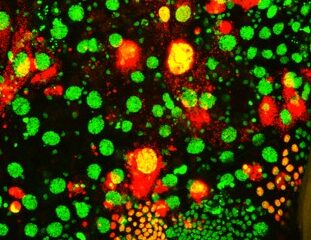
We are interested in how shape and form arise during animal development. During morphogenesis, cells interpret complex information and react accordingly to shape tissues and organs. Here, many cell behaviours, such as…

Research in the MacNeill lab is primarily focused on using molecular genetic tools to probe protein structure, function and regulation in various microbial model systems. In addition to molecular genetic methods, we…
We conduct research on a wide range of taxa including corals, fish, birds, aquatic invertebrates, and plants.
Our research aims to understand how people, and other animals, defend themselves against viral infections and how viruses are able to overcome these defences. This knowledge can then inform the development of…